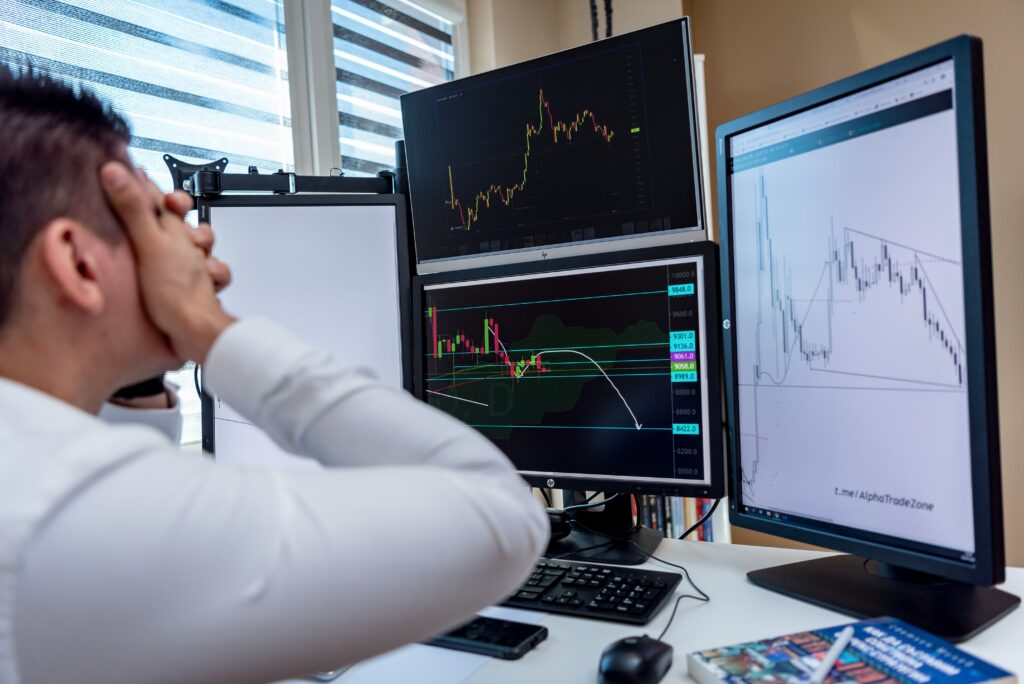
Ask any veteran trader what separates long-term survivors from those who blow up their accounts within the first year, and almost universally the answer is the same: risk management. It is not the most glamorous topic in trading education — nobody opens a brokerage account dreaming about position sizing spreadsheets — but it is, without question, the single most important discipline a trader can develop. This guide breaks down five foundational rules that professional traders rely on to protect capital, manage uncertainty, and stay in the game long enough for their edge to play out.
Rule 1: Never Risk More Than 1–2% of Your Capital on a Single Trade
The first rule of professional risk management is deceptively simple: on any given trade, the maximum you should be willing to lose is between 1% and 2% of your total trading capital. This is often called the “1% rule,” and while the exact threshold can vary based on strategy and experience level, the core principle is non-negotiable.
Here is why this matters mathematically. If you are risking 10% per trade and you hit a losing streak of five consecutive trades — which is entirely normal in probabilistic systems — you have lost half your account. Recovering from a 50% drawdown requires a 100% return just to break even. By contrast, if you risk 1% per trade, that same five-trade losing streak costs you roughly 5% of your capital, a figure that is uncomfortable but entirely recoverable.
How to Calculate Position Size
Position sizing is not guesswork. It follows a straightforward formula:
Position Size = (Account Capital × Risk Percentage) ÷ Distance to Stop-Loss in Pips/Points
For example: if you have a £10,000 account and you are willing to risk 1% (£100) on a trade, with a stop-loss set 50 pips away, your position size should be calibrated so that a 50-pip adverse move costs exactly £100. Most modern trading platforms include built-in position size calculators, and there are numerous free tools available online to assist with this.
The key discipline here is to calculate position size before entering a trade, not after. Once you are in a position, emotions interfere with rational decision-making.
Rule 2: Always Use a Stop-Loss — and Never Move It Against You
A stop-loss is a pre-defined exit point at which your trade closes automatically to limit losses. Think of it as a seatbelt: you hope never to need it, but you would never drive without one.
Many new traders make two critical errors with stop-losses. The first is not using one at all, hoping that a losing trade will “come back.” The second — arguably more dangerous — is moving the stop-loss further away when price approaches it, extending the potential loss in the hope of avoiding being stopped out.
Both behaviors share a common psychological root: the reluctance to accept a small, defined loss. This is a cognitive bias known as “loss aversion,” first documented by psychologists Daniel Kahneman and Amos Tversky. In trading, loss aversion kills accounts. A disciplined trader views a stop-loss trigger not as a failure, but as the strategy working exactly as intended.
Where to Place Your Stop-Loss
Stop-loss placement should be logical and technically justified, not arbitrary. Common methods include:
- Below a key support level for long positions (or above resistance for shorts)
- Beyond a recent swing high or low to account for normal price oscillation
- Using Average True Range (ATR) to account for an asset’s typical daily volatility — for example, placing your stop 1.5× the 14-period ATR away from entry
Avoid placing stops at round numbers (e.g., exactly at 1.3000 on a Forex pair), as these are common targets for institutional stop-hunting.
Rule 3: Maintain a Positive Risk-to-Reward Ratio
Risk-to-reward ratio (R:R) describes the relationship between the maximum amount you stand to lose and the maximum amount you stand to gain on a given trade. A 1:2 ratio means you are risking £100 to potentially make £200.
Why does this matter? Even a trading strategy with a relatively modest win rate can be profitable with a sufficiently positive R:R ratio. Consider:
- Win rate: 40% | R:R: 1:3 → Profitable over time
- Win rate: 60% | R:R: 1:0.5 → Can be unprofitable over time
Most experienced traders aim for a minimum 1:2 risk-to-reward ratio on their trades. This means their target profit is at least twice their defined risk. With this ratio, a trader only needs to be right approximately 35% of the time to break even — not accounting for commissions.
Before entering any trade, ask yourself: “Where is my stop-loss? Where is my target? Does the potential reward justify the risk?” If the answer is no, the trade does not meet your criteria, regardless of how convincing the setup looks.
Rule 4: Manage Your Total Portfolio Exposure
Individual trade risk is just one layer of risk management. The second layer is portfolio-level exposure — how much of your total capital is at risk across all open positions simultaneously.
Imagine you have five open trades, each risking 2% of your account. Your total open risk is 10%. If a macro event causes correlated moves across your positions, you could lose 10% of your account in a single session.
To manage portfolio exposure:
- Limit total open risk to between 5–10% of your account at any one time
- Diversify across uncorrelated assets where possible
- Be aware of correlation between instruments (e.g., EUR/USD and GBP/USD often move together)
- Reduce position sizes during high-volatility events such as major economic data releases
Rule 5: Control Your Emotions — Discipline Is the Real Edge
Technical rules are only as effective as your ability to follow them consistently. The most sophisticated risk management framework in the world is worthless if fear, greed, or frustration cause you to abandon it the moment real money is on the line.
Avoid Revenge Trading
After a loss, the instinct to immediately re-enter the market to “win it back” is one of the most destructive behaviors in trading. Revenge trading typically involves taking larger, less well-reasoned positions under emotional stress. When you hit a losing trade, step away. Review what happened. Return to the market only when you are calm and objective.
Treat Each Trade as One of Many
Professional traders think in terms of statistical samples, not individual outcomes. A single losing trade tells you very little about the quality of your strategy. What matters is how the strategy performs over hundreds of trades. Keeping a trading journal helps reinforce this perspective: it shifts your focus from individual P&L to process adherence.
Define Your Rules in Advance
The most effective way to manage emotions is to make your decisions before you are in a trade. Write down your entry criteria, stop-loss level, target, and position size before you execute. This removes the need for real-time emotional decision-making, which is where most trading mistakes originate.
Conclusion: Risk Management Is Not Optional
Profitable trading is possible for disciplined, educated market participants. But no strategy, no indicator, and no market insight can compensate for poor risk management. The five rules outlined above — limiting per-trade risk, using logical stop-losses, maintaining positive reward ratios, managing portfolio exposure, and developing emotional discipline — are the foundation on which sustainable trading is built.
⚠️ Educational Disclaimer: The content on Secure Finance Hub is intended for educational and informational purposes only. Nothing on this website constitutes financial advice, investment advice, or a recommendation to buy or sell any financial instrument. Trading financial markets involves significant risk of loss and may not be suitable for all investors. Always conduct your own research and consult a qualified financial adviser before making any investment decisions.